
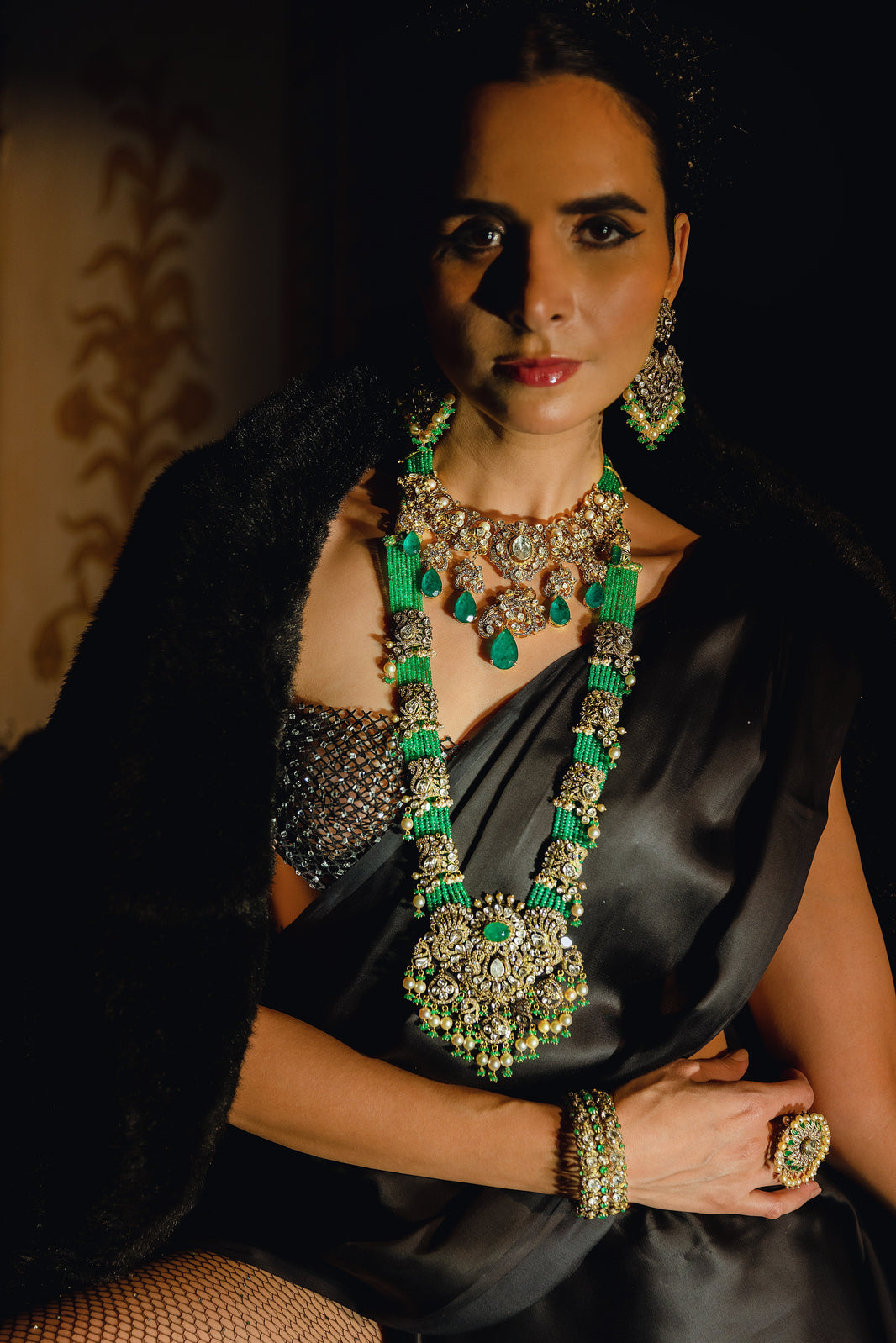

The choice between handcrafted and machine made jewellery shapes quality durability price and long term value for buyers. Each method delivers different strengths and understanding these differences helps buyers select pieces suited for investment gifting trousseau building or daily wear whether they are choosing a detailed choker necklace for a special occasion or a complete bridal jewellery set designed to last across generations without compromising on quality.
What Defines Handcrafted Jewellery
Handcrafted jewellery is created through manual techniques where artisans shape metal set stones and finish every element by hand. The human touch introduces natural variations that make each piece unique and personal
Key Characteristics
-
Subtle irregularities that reflect the maker’s touch
-
Organic detailing deeper textures and artistic finishing
-
Secure hand tightened stone settings ideal for Polki Kundan and Jadau
-
Longer creation time due to artisan led construction
Traditional Techniques
Handcrafted jewellery preserves heritage crafts such as Kundan Jadau Meenakari filigree engraving repoussé and hand forging. These skills passed down through generations allow intricate work that machines cannot replicate
Role of Artisanship
The artisan’s skill drives the final outcome ensuring cleaner joins stronger frames balanced weight and refined finishing that elevate both aesthetic and emotional value
Variations and Uniqueness in Every Piece
No two handmade pieces are identical. Small differences in texture alignment and stone placement give handcrafted jewellery exclusivity that appeals to brides and collectors
What Defines Machine-Made Jewellery
Machine made jewellery is produced using casting moulding laser cutting CNC tools and 3D printing. These technologies create precise repeatable designs quickly and at scale
How Modern Manufacturing Works
Manufacturers start with digital designs which machines reproduce in metal through automated casting and cutting. Stones are often machine set and polishing is completed with automated tools for consistent shine
Precision Consistency and Mass Production Benefits
-
Perfect symmetry and uniform finishing
-
Predictable quality across large batches
-
Lower cost due to reduced labour requirements
-
Ideal for lightweight daily wear pieces
Why Machine-Made Pieces Look Uniform
Automation removes the natural irregularities found in handmade work resulting in identical curves patterns and prongs that suit buyers who prefer uniformity
Craftsmanship Differences Buyers Should Notice
Craftsmanship affects how a jewellery piece looks feels and performs over time. Examining setting polishing finishing and structure helps identify the skill involved
Details in Setting Polishing Finishing and Structural Strength
Handcrafted pieces show deeper detailing stronger stone settings and carefully refined finishes that preserve metal texture. Machine made pieces focus on smoothness and precision but may lack depth in intricate work due to mould based construction
Signs of Manual Skill Versus Automated Production
Handmade jewellery carries micro variations in grain texture and alignment while machine made jewellery exhibits perfect repetition clean mould lines and identical prongs
How Craftsmanship Affects Durability
Hand strengthened joints and adaptive stone setting give handcrafted jewellery superior longevity. Machine made pieces maintain short to medium term durability but stone settings may loosen sooner in regular wear
Design and Customisation Capabilities
Buyers choose between handcrafted and machine made jewellery based on the level of customisation desired
Why Handcrafted Pieces Offer Deeper Customisation
Artisans can adjust shapes textures motifs colours and layouts at any stage allowing personalised bridal sets engagement pieces and heirloom recreations
What Machine-Made Systems Can and Cannot Customise
Machine made jewellery supports basic digital adjustments but cannot reproduce organic textures free form stone settings or traditional crafts with the depth of handmade work
Price Comparison and What Influences Cost
Different processes labour requirements and tooling affect the cost of handcrafted and machine made jewellery
Labour Time Material Wastage Precision Tooling
Handcrafted jewellery involves intensive skilled labour with lower material wastage. Machine made jewellery requires investment in machinery CAD development and mould creation with higher mass production wastage
How Price Reflects Effort and Process
Higher handcrafted prices reflect artisan time skill and rarity of techniques while machine made jewellery is priced for efficiency and rapid replication
Common Misconceptions About Expensive Equals Handmade
High price does not guarantee handmade origin. Brand markup gold rate and gemstone quality can raise prices even in machine produced pieces making craftsmanship evaluation essential
Quality Differences and Longevity
Handcrafted and machine made pieces age differently based on construction method
How Handmade Construction Impacts Wear and Tear
Hand shaped joints and individually adjusted prongs enhance strength allowing handcrafted pieces to maintain integrity for generations
Where Machine-Made Jewellery Excels and Where It May Fall Short
Machine made jewellery excels in symmetry and affordability but may wear down faster due to thinner mould based sections and non adaptive stone settings
Sustainability and Ethical Considerations
Sustainability influences jewellery choices as buyers assess social and environmental impact
Artisan Livelihood
Handcrafted jewellery supports skilled artisans and sustains communities dependent on traditional craft
Local Craft Preservation
Purchasing handmade pieces helps preserve heritage techniques and encourages their continuation across generations
Environmental Impact of Small Batch vs Mass Manufacturing
Small batch handmade production consumes less energy and produces less waste than high volume machine based manufacturing
When Buyers Opt for Handcrafted Jewellery
Handcrafted jewellery is ideal for buyers seeking meaning individuality and long term value
Ideal Scenarios
Handmade pieces suit custom bridal sets heirloom recreations and occasions requiring personalised craftsmanship
Occasions Where Uniqueness Quality and Prestige Matter
Handcrafted jewellery enhances weddings ceremonies and milestone celebrations where rich detailing and exclusivity elevate the experience
When Buyers Should Choose Machine-Made Jewellery
Machine made jewellery benefits buyers who prioritise convenience uniformity and budget friendly options
For Budget Everyday Use Uniformity or Fast Delivery Needs
Machine made pieces suit office wear gifting and trend based purchases where affordability and quick delivery matter
How to Identify If a Piece Is Handcrafted or Machine Made
Recognising production methods helps buyers understand craftsmanship and value
Visual Signs
Handcrafted pieces show organic irregularities while machine made pieces display perfect symmetry and uniform surfaces
Marks
Handcrafted jewellery may reveal subtle solder marks whereas machine made jewellery shows clean mould lines and identical internal surfaces
Precision Consistency Flaws and Artistic Irregularities
Handmade jewellery features artistic variations while machine made pieces follow exact digital measurements with no deviations
Final Buyer Checklist Before Deciding
This checklist helps buyers choose jewellery aligned with lifestyle purpose and long term expectations
Budget
-
Choose machine made jewellery for affordable everyday or trend driven designs
-
Choose handcrafted jewellery for personalised luxury heirlooms
Usage Frequency
-
Machine made for regular wear with lightweight comfort
-
Handcrafted for occasional wear requiring long term strength
Design Expectation
-
Handcrafted for artistic depth and cultural motifs
-
Machine made for clean modern uniform patterns
Value
-
Handcrafted pieces offer artistic emotional and generational value
-
Machine made pieces deliver accessible style and cost efficiency
Longevity
-
Handmade construction ensures structural durability
-
Machine made jewellery may need more maintenance over years
Authentication
-
Handcrafted pieces show artisan signatures textures and traditional markers
-
Machine made pieces show symmetrical patterns and factory precision